Meniscal Tear Treatment in Bengaluru
Persistent knee pain, swelling, clicking or locking can sometimes be caused by an injury to the meniscus. Get your knee evaluated to understand the type of tear and whether rehabilitation, meniscus repair or another treatment may be appropriate.
Book a Consultation
Tell us what you are experiencing. Our team will contact you regarding your appointment.
Our orthopaedic coordination team will contact you regarding your appointment slot.
Could Your Knee Symptoms Be Caused by a Meniscal Tear?
The meniscus is a shock-absorbing structure inside the knee. It can be injured during twisting movements, sports, falls or sometimes through age-related degeneration.
Pain Along the Joint Line
Sharp or dull localized tenderness directly along the inner (medial) or outer (lateral) joint margin between the thigh and shinbone.
Knee Swelling & Stiffness
Delayed joint effusion typically developing 12 to 24 hours after injury or physical activity, causing joint fullness and tightness.
Clicking or Catching Sensation
A noticeable snap, clicking or catching feeling during knee flexion or extension as torn tissue slips between articulating joint surfaces.
Knee Locking
A mechanical block where the knee becomes physically stuck and cannot be fully straightened, often indicating a displaced tear fragment.
Pain While Squatting or Twisting
Increased pain when rotating on a planted foot, getting up from a low chair, cross-legged sitting, or deep squatting movements.
Difficulty Bending or Straightening
Inability to achieve complete knee extension or terminal flexion due to pain, joint effusion, or mechanical impingement.
Important Clinical Note: A knee that repeatedly catches or becomes locked should be properly evaluated, particularly after an injury. Prompt assessment helps prevent secondary cartilage damage.
Get Your Knee Assessed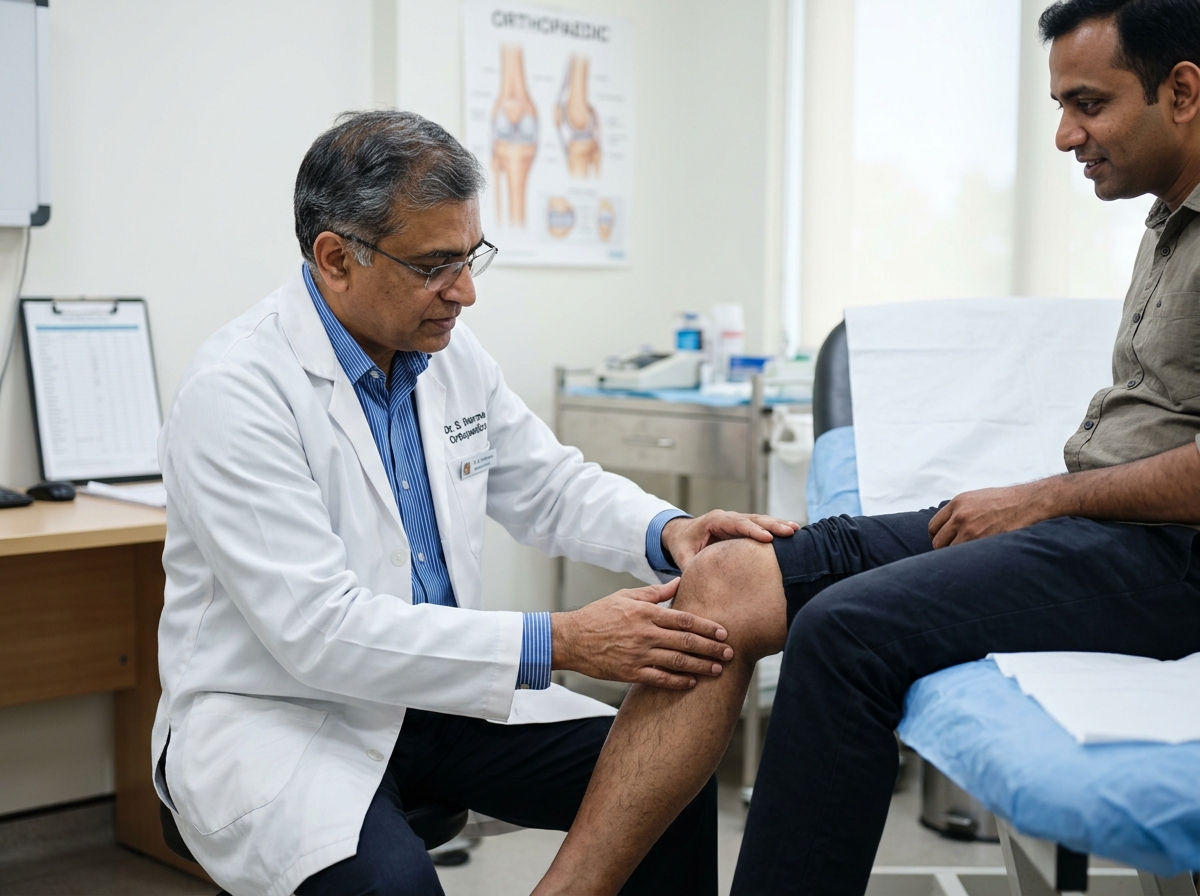
How Is a Meniscal Tear Diagnosed?
Diagnosis begins with understanding how the injury happened, where the pain is located and whether symptoms such as locking, clicking or swelling are present.
During clinical examination, our orthopaedic specialist assesses:
Clinical Tests
Tests such as McMurray's test or other meniscal stress tests gently rotate and flex the knee to identify whether pain, clicking, or mechanical friction is produced over the meniscus.
X-Ray & MRI Imaging
X-rays do not directly show the meniscus but may help identify other causes of knee pain, such as bone injury, joint space narrowing, or alignment factors.
MRI is commonly used to evaluate the meniscus and can help show the location, pattern and extent of the tear as well as associated cartilage or ligament injuries.
Bring your scan and reports to your consultation so the orthopaedic specialist can review the findings together with your symptoms and clinical examination.
Book an MRI Review & ConsultationNot All Meniscus Tears Are the Same
Meniscal tears occur in various geometric patterns and zones. Identifying the specific tear type guides whether the tissue can be repaired or requires conservative care.
Horizontal Tear
A tear running horizontally through the substance of the meniscus, dividing it into upper and lower leaves. Often related to repetitive loading or degenerative changes.
Longitudinal Tear
A tear running along the length of the meniscus parallel to its circular collagen fibres. When located in the outer vascular zone, it often has high healing potential for repair.
Bucket-Handle Tear
A larger longitudinal tear where the central fragment flips into the joint notch like a bucket handle. Frequently the classic cause of true mechanical knee locking.
Radial Tear
A tear that extends across the circular fibres from the inner rim toward the periphery. This disrupts the meniscus's ability to resist hoop stress during joint loading.
Meniscus Root Tear
An injury near the attachment of the meniscus to the tibial bone. Because root anchors secure the meniscus under load, root disruption significantly impairs shock absorption.
Ramp Lesion
A specific tear near the back of the medial meniscus at the junction with the joint capsule. Often hidden and commonly occurs alongside anterior cruciate ligament (ACL) tears.
Clinical Decision Factor: Treatment depends not only on the type of tear but also on its location, size, tissue quality, symptoms, patient age, activity level and associated injuries.
Discuss Your Tear PatternDoes Every Meniscal Tear Need Surgery?
Many meniscal tears can initially be managed without surgery, depending on the tear pattern, symptoms and individual circumstances.
Non-Surgical Treatment
May be appropriate for selected tears that are stable and do not cause significant locking or mechanical symptoms.
Treatment may include:
-
Activity Modification: Avoiding deep squats and repetitive twisting temporarily.
-
Pain & Swelling Management: Cold therapy, anti-inflammatory guidance, and relative joint rest.
-
Targeted Physiotherapy: Specialized exercises guided by hospital therapists.
-
Muscle Strengthening: Building quadriceps, hamstring, and hip stabilizers.
-
Range-of-Motion Exercises: Preserving joint mobility without aggravating the tear.
-
Gradual Return to Activity: Monitored functional progression.
Arthroscopic Treatment
Surgery may be considered when symptoms persist, the knee repeatedly locks or catches, the tear is displaced, or the tear pattern is suitable for repair.
Clinical Indications May Include:
-
Persistent Mechanical Symptoms: True locking or catching preventing daily knee movement.
-
Displaced Bucket-Handle Tears: Relieving a mechanically trapped joint fragment.
-
Repairable Vascular Tears: Preserving long-term joint cartilage in active individuals.
-
Root & Ramp Lesions: Restoring the anchor mechanism to protect joint biomechanics.
-
Failed Conservative Care: Chronic joint effusion or pain affecting functional independence.
Not Sure Whether Your Meniscus Tear Needs Surgery?
A thorough orthopaedic evaluation will clarify your tear geometry and help you decide the most appropriate treatment path.
Book a Specialist ConsultationHear From Our Recovered Patients
Real stories of meniscus recovery, joint preservation, and pain-free living at Sathya Sai Hospital.
 Verified Recovery
"The joint line catching and locking in my knee is completely resolved. Excellent arthroscopic care and post-op guidance."
 Verified Recovery
"I was able to return to walking and stairs comfortably without knee stiffness. Thankful to the orthopaedic specialists."
 Verified Recovery
"Highly precise treatment and attentive nursing staff. My knee feels stable and pain-free."
Can a Meniscus Injury Affect the Knee Long Term?
The meniscus plays an important role in protecting the joint surfaces of the knee.
Certain meniscal injuries, particularly when significant tissue is damaged or lost, may increase stress on the cartilage and can contribute to the risk of degenerative changes over time.
Early assessment and an appropriate treatment strategy can help determine whether the meniscus can be preserved and how the knee should be rehabilitated.
Meniscus & Knee Injury Care at Sathya Sai Hospital
Located in KR Puram, Bengaluru, Sathya Sai Orthopaedic & Multispeciality Hospital combines experienced knee arthroscopy surgeons, modern surgical infrastructure, digital imaging coordination, and in-house physiotherapy.
Consult an Orthopaedic & Arthroscopy Specialist
Consult our experienced orthopaedic and sports medicine team at Sathya Sai Hospital.
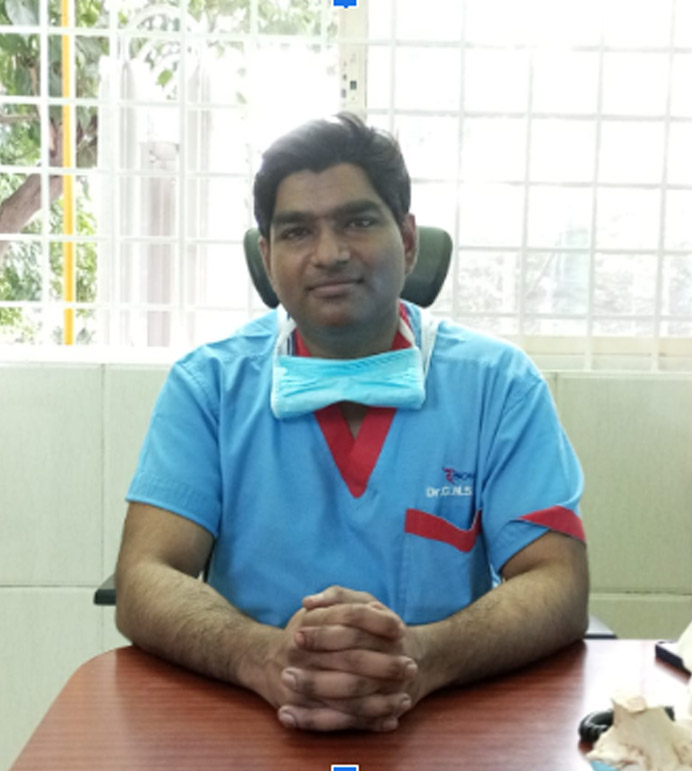
Dr. Vimal Kumar K H
Orthopaedic specialist with dedicated sub-specialty training in knee arthroscopy, meniscus repair, sports injuries, ligament reconstruction and joint preservation.
Book Appointment
Dr. Mahesh M N
CEO and Medical Director with over 20 years of clinical experience in complex joint reconstruction, trauma and spine surgery.
Consult with Team
Dr. Vijay M
Senior Trauma and Arthroplasty Surgeon with over 20 years of orthopaedic excellence in complex joint procedures.
Consult with TeamFrequently Asked Questions About Meniscal Tears
Clear, medically responsible answers to common questions about meniscal tears, symptoms, surgery, and recovery.
What does a meniscus tear feel like?
A meniscal tear often causes localized pain along the inner or outer joint line, particularly during twisting, squatting, or pivoting. Patients may also experience knee stiffness, mild swelling 12–24 hours after injury, and mechanical sensations such as clicking, catching, or sudden knee locking.
Can a meniscal tear heal without surgery?
In selected cases, yes. Tears located in the outer, vascular rim (the "red-red zone") have a blood supply and may heal with conservative treatment including activity modification, physical therapy, and muscle strengthening, provided the knee does not lock mechanically.
Can I walk with a torn meniscus?
Many individuals can walk in straight lines with a torn meniscus. However, walking on uneven surfaces, turning sharply, deep bending, or climbing stairs may trigger sharp joint-line pain, giving-way sensations, or mechanical catching.
Why does my knee lock with a meniscus injury?
Mechanical locking happens when an unstable tear fragment—such as in a bucket-handle tear—flips and becomes wedged between the femur and tibia, physically blocking the knee from fully straightening. A locked knee requires timely orthopaedic assessment.
Do all meniscal tears require an MRI?
While a specialist can identify joint-line tenderness and signs through physical tests like McMurray's, an MRI is usually recommended to clearly identify the exact tear pattern (e.g. radial, bucket-handle, or root tear), evaluate tissue vascularity, and check for associated cartilage or ligament damage.
When is meniscus repair recommended?
Meniscus repair is recommended when the tear is located in the vascular red-red or red-white zone, the tissue is healthy and holds sutures well, the patient is active, and preserving the shock-absorbing function is critical to protecting joint cartilage.
What is the difference between meniscus repair and meniscectomy?
Meniscus repair uses specialized sutures to stitch the torn edges back together so they can biologically heal. Partial meniscectomy removes only the unstable, frayed portion in avascular zones that cannot heal, smoothing the remaining healthy rim.
Is it better to repair or remove the torn meniscus?
Whenever technically feasible, preserving the meniscus through repair is preferable because it maintains joint cushioning. However, if the tear is complex, degenerate, or located in an avascular zone where healing cannot occur, partial meniscectomy is the medically appropriate choice to relieve mechanical pain.
How long does meniscus rehabilitation take?
Rehabilitation duration depends heavily on the treatment: partial meniscectomy often allows rapid recovery over a few weeks with early weight-bearing. Meniscus repair requires a protected protocol with restricted weight-bearing and controlled range-of-motion over 6 to 12 weeks to protect the healing sutures.
When can I return to sport after a meniscus injury?
Return to sport is based on objective strength, absence of swelling, and functional milestones rather than an arbitrary calendar date. Partial meniscectomy patients often return sooner, while meniscus repair patients require several months for biological tissue consolidation before impact sports are resumed.
Can a meniscus tear cause arthritis?
The meniscus protects articular cartilage. When a significant portion of the meniscus is damaged or removed, contact stress on the knee joint increases, which can elevate the long-term risk of degenerative wear. Early assessment and tissue preservation help mitigate this risk.
Can a meniscal tear occur together with an ACL injury?
Yes. More than 50% of acute ACL ruptures also involve a meniscal tear (lateral meniscus in acute trauma, medial meniscus in chronic instability). During arthroscopy, surgeons often reconstruct the ACL and repair the meniscus simultaneously.
Have a question regarding your knee MRI or symptoms?
Ask Our Orthopaedic TeamIs Knee Pain, Clicking or Locking Affecting Your Daily Life?
If you have persistent joint-line pain, swelling, clicking, catching or knee locking after an injury, an orthopaedic assessment can help identify whether the meniscus is involved and determine the appropriate treatment.
Request an Evaluation
Our team will call you to confirm appointment details.
Our orthopaedic coordination desk will contact you shortly.